Replacing a single missing tooth
One implant and one crown replace a missing tooth without touching the healthy teeth either side.
How a single implant works
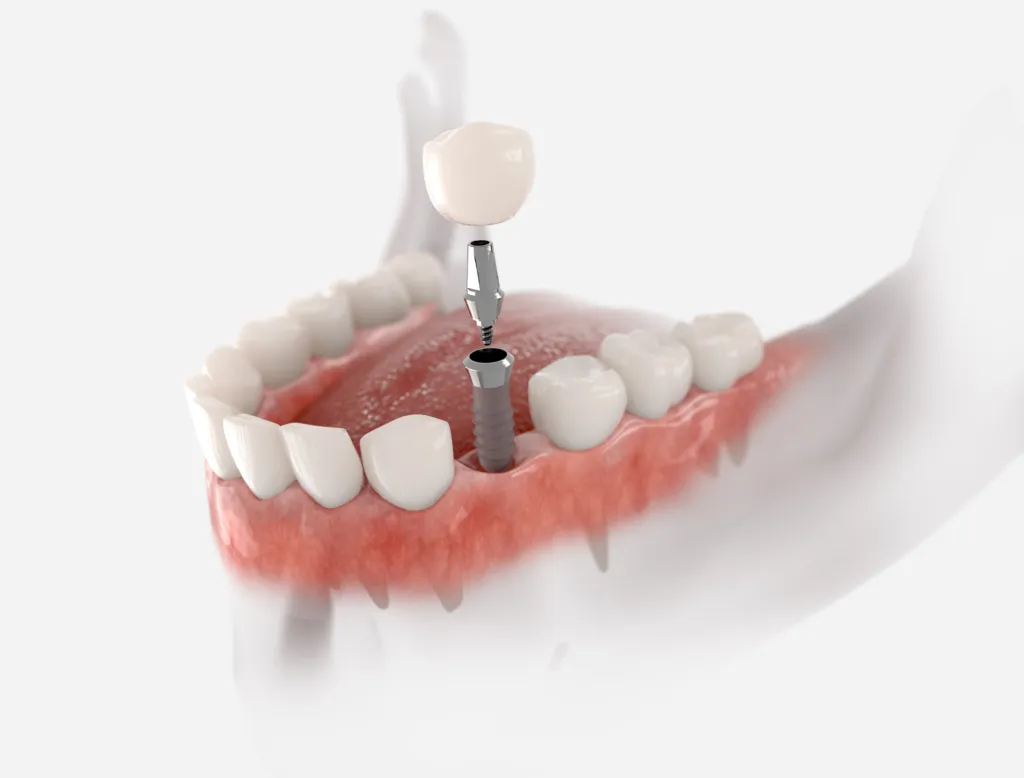
A dental implant is a small titanium post that takes the place of a missing tooth root. It sits in your jawbone, and once the bone has bonded to it (a process called osseointegration) it can hold a crown: the part of the tooth you see. A small connector, called an abutment, joins the two.
Because the implant stands on its own, the teeth either side of the gap are left as they are, rather than being ground down to hold a conventional bridge. Replacing the lost root also helps to prevent further loss of jawbone where the tooth used to be.
When your treatment is finished, you have a single crown designed to look, feel and work like a natural tooth. You look after it in the same way as your own teeth.

- The crownthe tooth you see
- The abutmentthe connector
- The implanta titanium post in the jawbone
Is a single implant right for you?
A single implant may suit you if:
- you have one missing tooth, or a tooth that can't be saved
- the teeth either side are healthy, and you'd rather not have them cut down for a bridge
- you're an adult whose jaw has stopped growing
- your gums and remaining teeth are healthy, or can be made healthy first
- there is enough bone to hold an implant, or it can be built up with bone grafting
If you smoke or drink heavily, please tell us at your consultation. Both reduce how well implants, and natural teeth, survive.
Other options. We'll talk you through every option, not just implants: an adhesive bridge, a conventional bridge or a removable denture each has its own strengths and drawbacks. There's more on each in Missing teeth solutions.
Your treatment, step by step
Consultation. A 30-minute appointment with a full examination. You leave with a fully costed treatment plan and a letter explaining the whole procedure. Mention any holidays or work commitments, so we can plan around them.
3D scan, if you need one. A CBCT scan shows your jawbone in three dimensions, so your implant can be planned precisely. Scans are taken at our Cirencester practice.
Getting your mouth ready. Implants do well in a healthy mouth, so any decay or gum problems are treated first. A tooth that can't be saved is removed, and if there isn't enough bone, it can often be built up.
Placing the implant. This is usually done under local anaesthetic. If you're nervous, IV sedation is available.
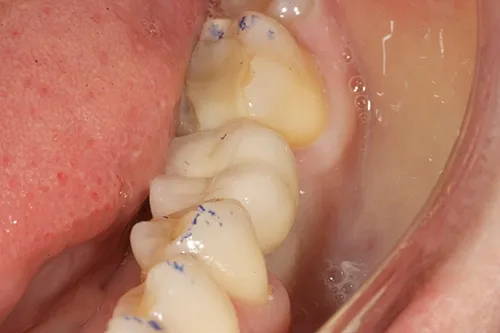
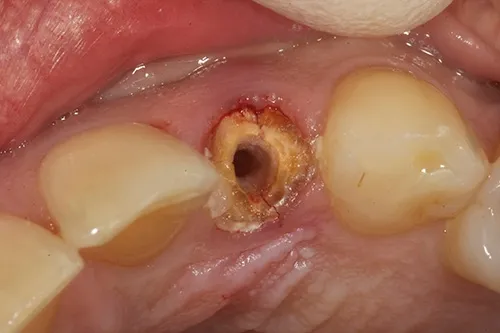
Healing. The implant is left to settle and bond with the bone, usually for 6 to 12 weeks. You won't necessarily have a gap while it heals: in our single-tooth cases the space was filled with a temporary bridge, a small denture or a temporary crown on the implant.
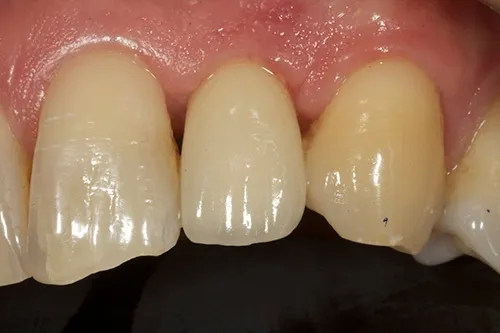
Your new crown. We record the position of the implant, often with an iTero digital scan rather than a traditional impression tray. Your crown is then made in a dental laboratory and fitted, which usually takes a couple of weeks.
Looking after it. You clean your implant crown like a natural tooth, with extra care where it meets the gum. Regular hygienist visits and check-ups help to keep it healthy.
What to expect afterwards
Any after-effects are usually mild: perhaps slight bruising, a dull ache and some swelling. Keep the following week free of big social or work commitments, just to be on the safe side. Taking time off work isn't usually necessary.
Your written aftercare instructions include soft food for the first week, no smoking for two weeks before and after surgery, and no alcohol for two weeks. If anything worries you, however small, call us on 01285 640248, or out of hours on 07912 668541.
How long it takes
These are guides only; your plan will give your own timings.
- Planning
- May take a month or so.
- Any treatment needed first
- From a few weeks to several months.
- Healing after the implant is placed
- Usually 6 to 12 weeks.
- Fitting your crown
- Usually a couple of weeks.
Most treatment takes 3 to 9 months, or 9 to 18 months if you need bone grafting first. In some cases, an implant can take a crown at, or soon after, the time it is placed. It's important not to rush: moving on before the bone and gum have healed can cause even well-planned treatment to fail.
Fees
A single implant and crown starts from £2,940: the implant fixture is £1,595, and an implant crown, including the abutment that joins it to the implant, is from £1,345.
| Item | Details | Price |
|---|---|---|
| Initial clinical consultation (30 minutes) | A full examination of your mouth and a talk about your options. You receive a fully costed plan for your treatment and a letter explaining the whole procedure. | £95 |
| Initial clinical consultation with Dr Ross Cutts (30 minutes) | The same full consultation, with our principal dentist, Dr Ross Cutts. You receive a fully costed plan for your treatment and a letter explaining the whole procedure. | £150 |
| CBCT 3D scan (at our Cirencester practice) | A 3D X-ray of your jaw that shows the shape and depth of the bone, so implants can be planned precisely. Charged in addition to the consultation, only if a scan is needed. | £210 |
| Implant fixture (the post that goes into the bone) | The implant itself: a small titanium screw placed in the jawbone to take the place of a tooth root. Priced per implant. | £1,595 |
| Implant crown, back tooth | The crown (the visible tooth) made for and fitted on top of an implant, for a back tooth, including the abutment that connects the two. | from £1,345 |
| Implant crown, front tooth | The crown (the visible tooth) made for and fitted on top of an implant, for a front tooth, including the abutment that connects the two. | from £1,345 |
| Artificial bone (guided tissue regeneration) | A bone-substitute material placed where the bone is too thin, to help new bone form around an implant. | from £480 |
Your consultation is £95, or £150 with Dr Ross Cutts. If you need a CBCT scan, it is £210. If you need extra bone, artificial bone (guided tissue regeneration) is from £480. You'll receive a written, fully costed plan before treatment starts, and you can pay in stages as your treatment progresses. Prices are from our August 2026 price list and may change. See all fees.
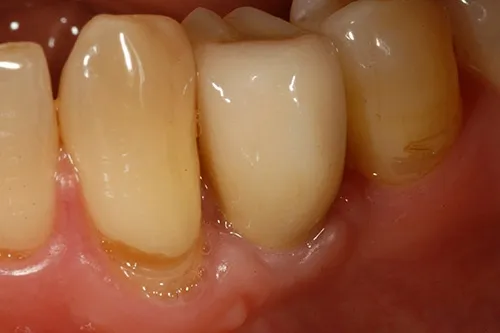
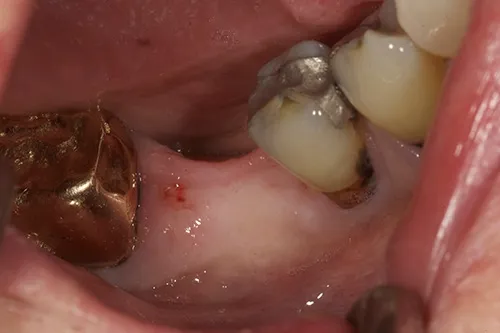
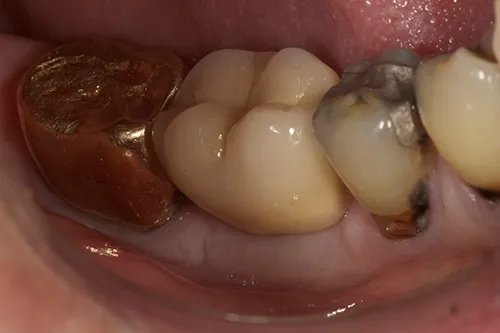
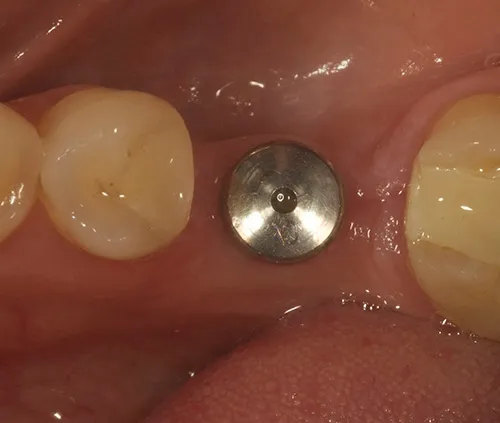
Single-tooth cases
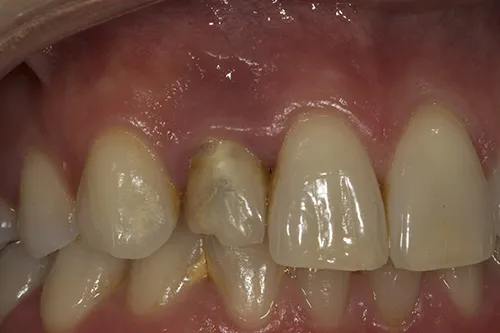
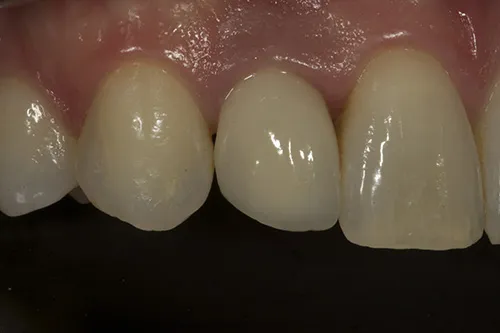
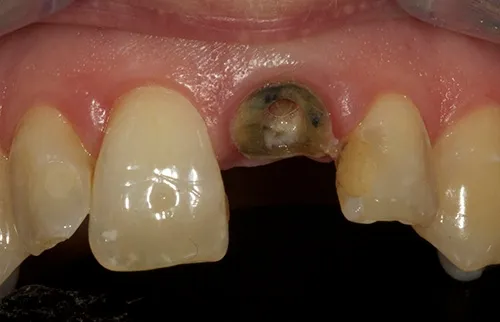
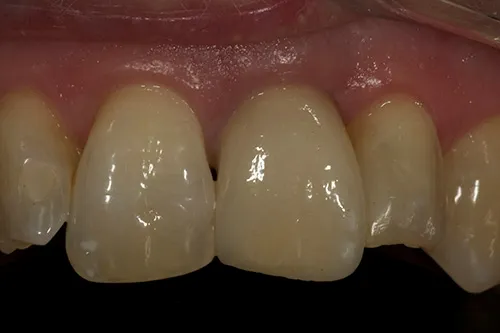
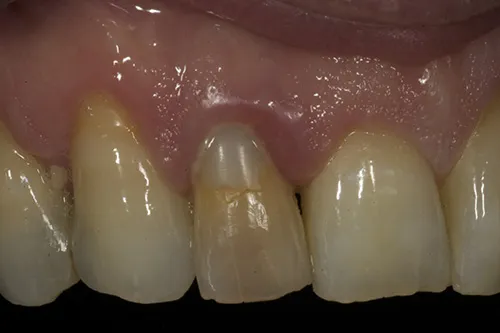
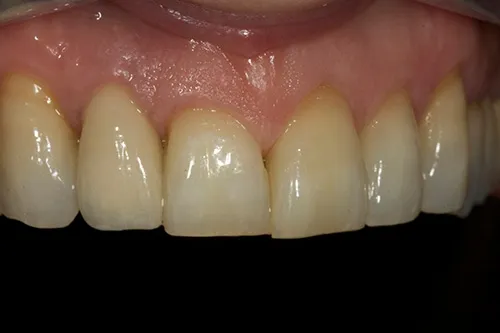
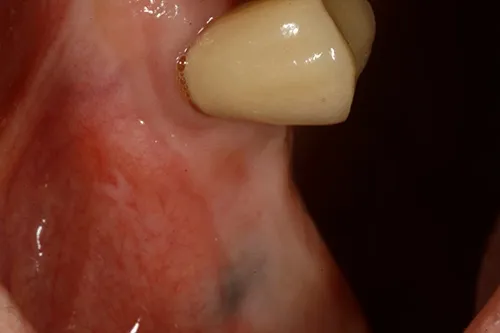
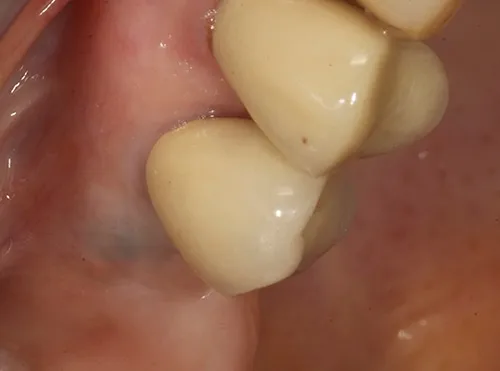
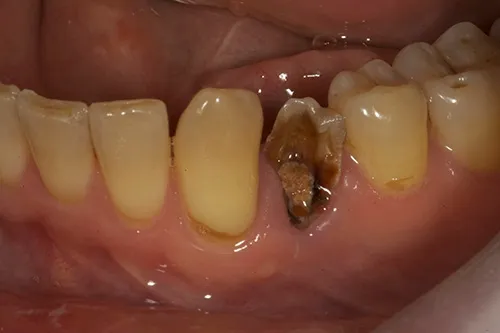
Step-by-step photographs from single-tooth cases at the practice, from before treatment to the fitted crown.
- Before
 After
- Before
 After
- Before
 After
- Before
 After
- Before
 After
- Before
 After
- Before
 After
- Before
 After
Questions about single implants
How do implants compare with dentures and bridges?
Each option has strengths and drawbacks. Removable dentures cost less, but they often need adhesive, can feel loose or uncomfortable, and can add to decay, gum disease and shrinkage of the bone and gums. An adhesive bridge needs little or no drilling of the teeth next to it, but it can come loose, so it is often seen as temporary. A conventional bridge means filing down the healthy teeth either side of the gap to hold it, and over time these crowns can loosen and lead to decay. An implant isn’t attached to the teeth next to it, so they are left untouched, and it can be combined with bone grafting where needed.
How much does a dental implant cost?
A single implant and crown starts from £2,940. That’s the implant fixture (the screw placed in the bone) at £1,595, plus an implant crown, including its abutment, from £1,345. You may also need a consultation (£95, or £150 with Dr Ross Cutts), a CBCT 3D scan (£210) and, if the bone needs building up, artificial bone from £480. Every patient receives a written, fully costed plan before treatment starts, so you’ll know the full cost before you decide. Prices are from our August 2026 price list and may change.
Why choose an implant rather than a bridge for one missing tooth?
A conventional bridge is held by crowns on the teeth either side of the gap, so those healthy teeth have to be filed down to support it. A single implant replaces the missing root on its own and holds a crown on top, so the neighbouring teeth are left as they are. A bridge is still a good option for some people, and we’ll compare both with you, including the cost, at your consultation.
Your implant dentist
Dr Ross Cutts (GDC 78162) is the practice principal, an ITI Fellow with a master's degree in prosthodontics.
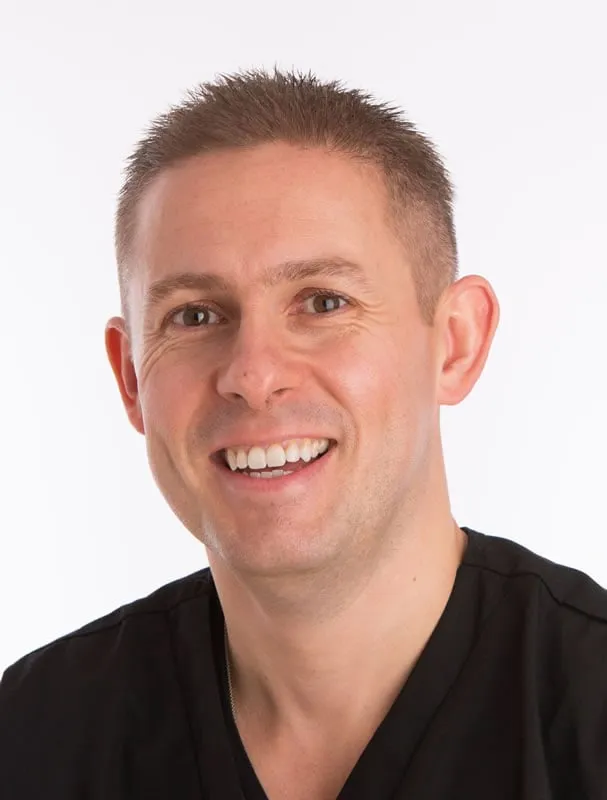
Dr Ross Cutts
Practice Principal
GDC 78162
Principal dentist and ITI Fellow with a master's degree in prosthodontics. Ross sees every implant referral personally, at Cirencester and Stow-on-the-Wold.
Profile: Dr Ross Cutts
Start with a conversation.
Book a consultation to talk through your options. You'll leave with a clear, fully costed plan to take home and think over.
Implant treatment is available at both our Cirencester and Stow-on-the-Wold practices, so let us know your preference when you book.